See Explanation
[]
Gastroenterology
intestinal disorders
anal fissure
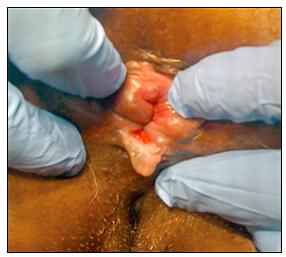
A 38-year-old female executive presents to an outpatient clinic complaining of severe pain during and after bowel movements, which has been progressively worsening over the past two months. She occasionally notices bright red blood on the toilet paper and experiences significant straining due to the pain, often leading to incomplete evacuation. Her medical history is otherwise unremarkable, and she denies any recent changes in diet or medication. She recently returned from a business trip overseas. On physical examination, her vital signs are stable: temperature 36.8°C, blood pressure 118/76 mmHg, pulse 78/min, respirations 14/min, and oxygen saturation 99% on room air. Inspection of the perianal area reveals a distinct, small, superficial linear ulceration situated at the 9 o'clock position (lateral to the midline) relative to the anus. There is no palpable mass or fluctuance. Given these findings, what is the most appropriate initial diagnostic approach and subsequent primary management strategy for this patient?
| Lab Parameter | Value | Reference Range |
|---|---|---|
| White Blood Cell Count | 9.2 x 10^9/L | 4.0-11.0 x 10^9/L |
| Hemoglobin | 138 g/L | 120-160 g/L |
| Platelets | 260 x 10^9/L | 150-400 x 10^9/L |
| Erythrocyte Sedimentation Rate (ESR) | 25 mm/hr | 0-20 mm/hr |
| C-Reactive Protein (CRP) | 8 mg/L | <5 mg/L |
| HIV Ag/Ab Combo Test | Non-reactive | Non-reactive |
Edit question